
No pictures of James A. has been found so far, but we have a few artifacts including his signature,
that tell some of his story.
James A. was born in 1828, Bedford, Tennessee
James A's parents were:
James A. was born in 1828, Bedford, Tennessee
James A's parents were:
Allison Billington (1807-1860) North Carolina and Elizabeth.Hamilton (1805-1871) North Carolina
*They were married in 1825, McCracken, Kentucky
Allison's parents were:
Ezekiel Billington(1759-1848)New Jersey and Elizabeth Penny (1786-1846),North Carolina.
James Billlington (1697)and Isabell Lawrenson (1697), Lancashire, England.
James' parents were:
John Billington (1653-1710) and Katherine Ward ( 1657) Lancashire England.
John's parents were:
Thomas Billington (1607-1678 and Ellen Kitchen (1615) Lancashire, England.
Thomas' parents were:
John Billington (1583-1630) and Agnes Eccleston (1583) Lancashire, England.
***************************************************************************
 James A. met and married Florinda Atkinson in 1953.
With machinery and men evacuated from areas under siege in Arkansas, operated under the command of Lt. Col. G.H. Hill. Plant included leather shop, tin shop, dry kiln, carpenter shop. The 150 to 200 man work force had (besides gunsmiths and guards) butchers, tanners, blacksmiths, draftsmen, carpenters, harness makers, and coal burners; guns made were .54 caliber, long and short Hill Rifles; long and short Texas Rifles; Austrian, Enfield and Tyler Rifles, with barrels 27 to 37½ inches long. Some were equipped with steel tipped bayonets invented by Short. During 3 months of 1864, products made were 394,156 cartridges, 411 rifles and 3,531 canteens; 160 guns were repaired.
Many Tyler rifles were sent to troops fighting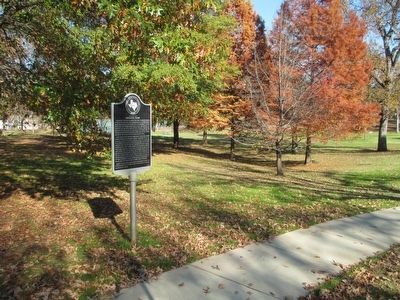 north and east of Red River, to prevent a Federal invasion of Texas.


There was an old black man and his wife who had been Billington servants for years back in Texas. When the slaves were freed, they didn't know where to go or what to do. They begged to go with the family as they were leaving Texas for Missouri. Finally, James A. and Florinda told them they could come but to remember they were free. The family and servants arrived in Missouri at a time when there was great conflict as to whether Missouri was to be slave state or a free state. Feelings were still strong against those who had slaves. People acted as if they would fight the war over again because they thought this couple were slaves. It was hard to convince some of the citizens that these "slaves" were free and had begged to come because they didn't know where to go or who would take care of them. In 1967 Missouri became a free state. Allison's parents were:
Ezekiel Billington(1759-1848)New Jersey and Elizabeth Penny (1786-1846),North Carolina.
*Ezekiel Billington was granted land in Tennessee for his service in the Revolutionary War.
That area became where Fort Knox was built in 1918.
Ezekiel's parents were:
James Billington (1723-1764) from England and Anna America Garner (1723-1767) New Jersey.
*So James was the immigrant parent.
*So James was the immigrant parent.
James' parents were:
James Billlington (1697)and Isabell Lawrenson (1697), Lancashire, England.
James' parents were:
John Billington (1653-1710) and Katherine Ward ( 1657) Lancashire England.
John's parents were:
Thomas Billington (1607-1678 and Ellen Kitchen (1615) Lancashire, England.
Thomas' parents were:
John Billington (1583-1630) and Agnes Eccleston (1583) Lancashire, England.
***************************************************************************
James A. came to Texas with his family about 1850. His family was greatly influenced by Sam Houston, who was the governor of Tennessee until he moved to Texas in 1832. Houston became a senator in 1846 and later became Governor of Texas in 1859.
*more about Sam Houston here: https://www.americaslibrary.gov/es/tx/es_tx_houston_1.html
* and here: https://www.nga.org/governor/samuel-houston-2/

The Atkinson family lived in Cotton Gin, Freestone County, Texas.
More about this family in future blogposts.


The Allison Billington family moved to Limestone County, Texas around 1850-1852. When James married Florinda Atkinson in 1853 he started his own ranch near by and their first three children were born on their ranch there:
Demetrious Seldon ( 1855-1944); Roberta E. (1856-1879) and Quintus Sebastian (1858-1864).
When the Civil War broke out and all came to be enlisted, the drafting officer noticed the gun carried by James and asked him where he got it. James replied that he made it himself. So rather than being sent to the front, he was sent to the gun factory to make guns for the southern army. He was enlisted in the Texas Confederate Cavalry in 1861 in Tyler , Smith County, which was about 110 miles from their ranch.
 |
 |
| Billington Ranch was in Limestone County - nearest town on this map is Waco |
Three of his children were born in Tyler:
Merriot Ciscilian (1861-1940), Corinthia Aldonia (1862-1864), and James William.
(1865-1890). His son, Quintus and daughter, Corintha died, while the family was living in Tyler, Texas.
One story of their lives in Tyler, Texas, when James served at the gun factory, highlights the fact that the gun factory was hidden in a wildness area. Protecting the location was paramount to the citizens of the area. James' son, Dee, was entrusted with the responsibility of secretly delivering lunch to his dad, and returning without being followed or caught.
**********************************************************************************
Inscription on the historical marker: Founded in 1862 by J.C. Short and Wm. S. N. Biscoe (both gunsmiths) and Col. Geo. Yarbrough. In 2-story brick main building, on 125 acre site, contracted to make for State of Texas 5,000 rifles for the arming of troops in the Civil War. After trouble obtaining men and material, plant was sold in October 1863 to the Confederate government. Short and Biscoe stayed on with the plant, to continue making guns.
With machinery and men evacuated from areas under siege in Arkansas, operated under the command of Lt. Col. G.H. Hill. Plant included leather shop, tin shop, dry kiln, carpenter shop. The 150 to 200 man work force had (besides gunsmiths and guards) butchers, tanners, blacksmiths, draftsmen, carpenters, harness makers, and coal burners; guns made were .54 caliber, long and short Hill Rifles; long and short Texas Rifles; Austrian, Enfield and Tyler Rifles, with barrels 27 to 37½ inches long. Some were equipped with steel tipped bayonets invented by Short. During 3 months of 1864, products made were 394,156 cartridges, 411 rifles and 3,531 canteens; 160 guns were repaired.
Many Tyler rifles were sent to troops fighting
Photographed By Randal B. Gilbert, December 5, 2015
2. Ordnance Plant Marker
To see the historical marker:
https://www.hmdb.org/m.asp?m=91303
The Tyler gun plant was bought by the Confederate government for $100,000, and a Colonel Hill was placed in charge to make rifles of both the Enfield and Austrian models. Some 200 persons were employed.
https://www.tshaonline.org/handbook/entries/gun-manufacturing-during-the-civil-war#:~:text=The%20Tyler%20gun%20plant%20was,Some%20200%20persons%20were%20employed.

********************************************************************************************************************************************


+
The following stories from Estelle gives insight into James' interaction with his servants and his children:
"James and his brother T. often talked about slavery when they were back in Texas. They were quite religious (Baptists) and the felt strongly that slavery was wrong. They had a few slaves, though, and they concluded that the right of some human beings to own others would have to end. They felt the slaves would have to be educated so they could take care of themselves. Therefore they required the children of their slaves to go to school with the others as it wasn't against the law in Texas to teach black children. "
+ + + +


To us, the present generation, James is not only an honored ancestor, and example of a man of passion and grit, but he is also a hallmark of the American Dream and the Westward Movement in the early history of our nation- we can be proud to share his story.

No comments:
Post a Comment